Usada Bali and the massage table
Usada Bali is the palm-leaf healing tradition behind many ideas people connect with Balinese massage in Nusa Dua.
The palm leaves behind the word usada
Usada Bali is not a spa style. Usada Bali is the Balinese body of healing knowledge written on lontar, the prepared leaves of the palmyra palm, and read by balian healers. The manuscripts contain plant recipes, body maps, mantras, rules for diagnosis, ritual instructions and advice for daily conduct. Some texts are practical. Some are religious. Many sit in the middle, because Balinese healing did not grow inside the modern wall between the body and ceremony.
The word usada is related to Sanskrit ausadha, meaning medicine. The texts were copied by hand in Balinese script, with a small knife cutting letters into the leaf before soot or pigment was rubbed across the surface to darken the lines. A lontar book is tied between wooden covers. It has a smell of dry leaf, smoke and cupboard dust when an old bundle is opened.
One public place that matters in this history is Gedong Kirtya in Singaraja, founded in 1928 to collect and preserve lontar manuscripts from across the island. The collection helped make clear that Balinese traditional healing in Bali was not one single secret book. It was a library of overlapping knowledge: local plant use, Indian medical ideas, Tantric anatomy, village practice and the judgement of individual healers.
A balian is not simply a massage therapist. A balian usada reads and applies written knowledge. A balian taksu works through charisma or spiritual force. A balian ketakson is associated with trance or possession. The categories overlap in real life, but the distinction matters because a modern spa should not borrow the title without doing the work that title requires.
What a spa can inherit honestly
A spa can speak honestly about Balinese traditional healing in Nusa Dua when the spa names the boundary. Ijen Spa can inherit touch traditions, respect for oil and herbs, the habit of asking where the body is tired, and the Balinese idea that good bodywork should settle the breathing before pressure goes deep. Ijen Spa cannot honestly claim to read lontar, diagnose imbalance or replace a balian.
That boundary is not a weakness. It is the cleanest way to respect the tradition.
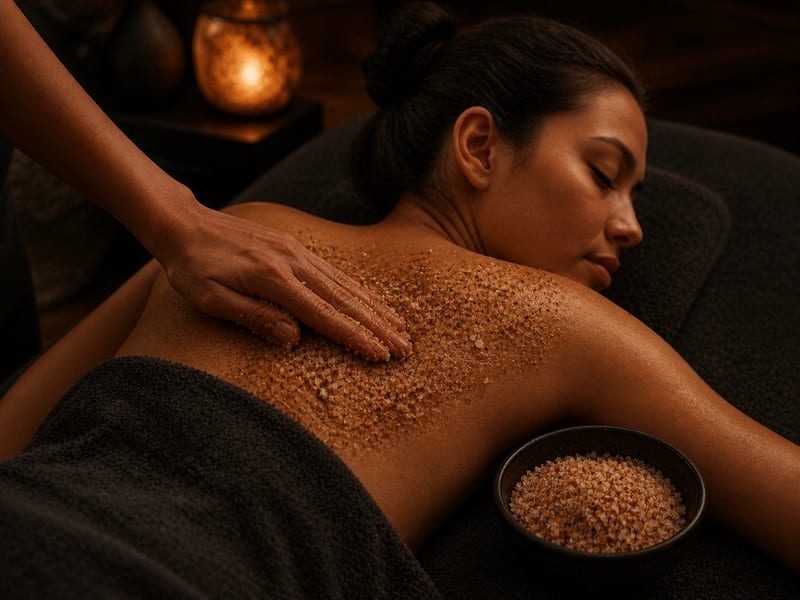
The part that belongs on the table is pijat, the Indonesian and Balinese word used for massage. In village life, pijat may sit beside herbal pastes, warming rubs, steam, advice from elders and ritual offerings. On a modern table, pijat becomes something narrower: hands working through muscle and fascia with oil, pressure and rhythm. Narrower can still be good.
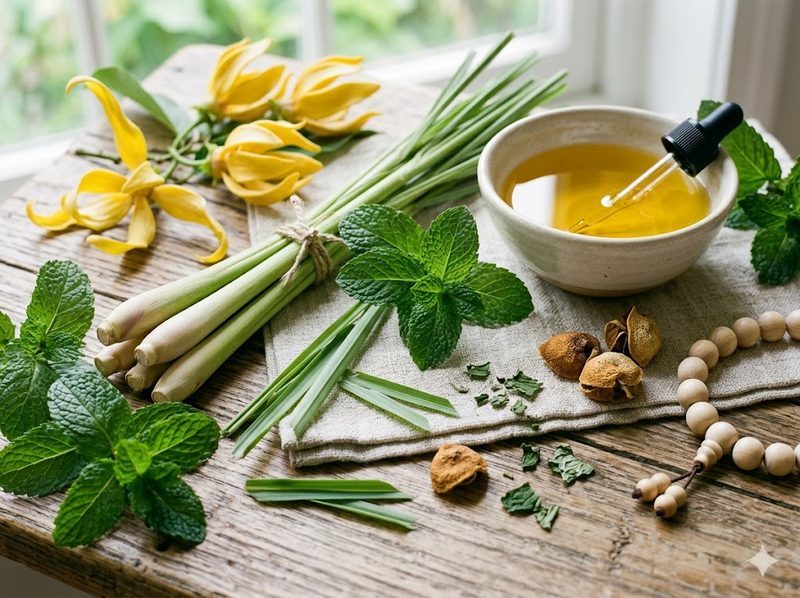
Herbal rubs belong to the same family of practice, especially warming pastes such as boreh and skin preparations made with roots, spices, rice powder or leaves. The old texts record plant knowledge, but a spa treatment should not pretend that every fragrant paste is a prescription. A paste can warm the skin. Oil can reduce drag under the hand. A rubbed shoulder can drop away from the ear. Those are honest claims.
How the bodywork feels on the table
At Ijen Spa, the closest menu link is Balinese (Full body massage): Rp 299,000 (60 min) · Rp 399,000 (90 min). The session starts before the oil touches the skin. Guests choose light, medium or strong pressure at booking, then choose focus zones and zones to avoid before the session starts. Three house oil blends - Relaxing, Grounding and Uplifting - are included in every massage at no extra charge.
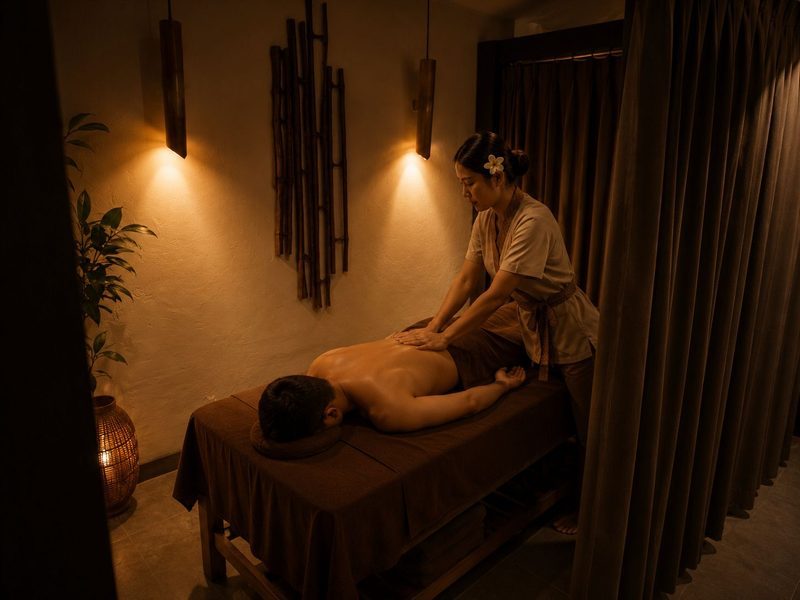
The first minutes should not be heroic. A good Balinese massage begins with spreading oil and reading the body. Warm oil takes around half a minute to lose its surface chill on the back. The therapist uses long palm strokes from lower back to shoulders, then back down the sides of the spine without pressing on the bones. If strong pressure starts in the first two minutes, the therapist is rushing.
A practical 60-minute order is simple. About 20 minutes go to the back, shoulders and neck while the guest lies face down. Another 15 minutes go to the back of the legs and feet. After turning over, the therapist works the front of the legs, arms, hands, shoulders and scalp. A 90-minute Balinese massage is better when the body has two real problem areas, because the therapist does not have to steal time from the legs to fix the neck.
The hard part is changing pressure without breaking rhythm. Thumb work along the shoulder blade is useful only if the thumb is not stabbing. Forearm pressure on the back can feel broad and calm, but a careless forearm rolls over bone. Calf work after walking or beach days needs patience because the tissue may be tight near the Achilles tendon. The therapist has to listen with the hand, not just ask whether the pressure is okay every five minutes.
Where the old herbal idea still shows up
The herbal side of Usada Bali is more complicated than a nice scent. Lontar texts name plants, minerals and animal ingredients in combinations that belonged to a healer's training and social world. Some ingredients were gathered fresh. Some were cooked. Some were paired with mantra or timing. Pulling one plant name out of that setting and calling it ancient medicine is lazy.
A modern spa can keep the sensible part. Oil choice affects the first contact with the skin, the guest's breathing and the amount of grip the therapist can use. A thicker oil lets the palm move slowly over the back without skipping. A lighter oil makes thumb work easier around the neck and forearms. The scent should stay in the background; nobody needs a cloud of perfume while face down in a headrest.
This is also where Balinese massage differs from deep tissue work as many visitors know it. Balinese bodywork can use strong pressure, but the pressure is mixed with long strokes, kneading, skin rolling and small circles. The aim on the table is not to win a contest with tight muscles. The aim is to persuade the body to give the therapist access.
That sounds gentle. It is not always gentle. Good medium pressure through the palm can feel more effective than a hard elbow used too soon. Strong pressure is best saved for guests who already know they like it and can breathe normally under it. Holding the breath is a useful warning sign.
Who should book, and who should speak first
Usada Bali as a tradition belongs to people seeking a balian. Balinese massage at a spa suits a different guest: someone who wants grounded bodywork after travel, sport, long sitting or a week of bad sleep. For a first massage in Nusa Dua, medium pressure is the safest choice for most bodies. Light pressure fits sun-heavy days. Strong pressure fits guests who book strong pressure at home and mean it.
After a flight, ask for extra time on feet, calves, hips and the upper back. Ankles can feel puffy after long sitting, and the lower back may feel dull rather than sharp. The therapist can use slower strokes toward the trunk, gentle ankle movement and palm pressure around the hips. Drink water afterwards, but do not turn water into a ritual. Just drink water.
After surfing, the pattern changes. Shoulders, ribs, lower back and hip flexors usually need attention, while the neck may be more sensitive than expected from paddling and looking up. A massage after surfing in Bali should avoid deep work on sunburn. Red skin is not a place to prove strength.
Tell the therapist before the session if there is pregnancy, a recent injury, fever, severe sunburn, unusual swelling, skin infection or a medical condition that affects pressure. Massage should wait when someone has a fever. Recent injuries need the therapist's say-so before the session, and some areas may need to be avoided completely.
Choosing the length without overthinking it
Book 60 minutes when the plan is simple: one focus area, dinner soon, or a body that is tired but not knotted. A 60-minute Balinese massage can cover the full body, but the treatment has to keep moving. If the shoulders take too long, the legs get a polite version of massage rather than proper work.
Book 90 minutes when there are two honest complaints. Neck and calves. Lower back and feet. Shoulders and hips after a scooter day on the Bukit. Ninety minutes is worth the extra time because the therapist can warm the back properly, work the legs without rushing and still leave space for hands, scalp and neck. This is a position, not a rule: for full-body Balinese work, 90 minutes is the better treatment.
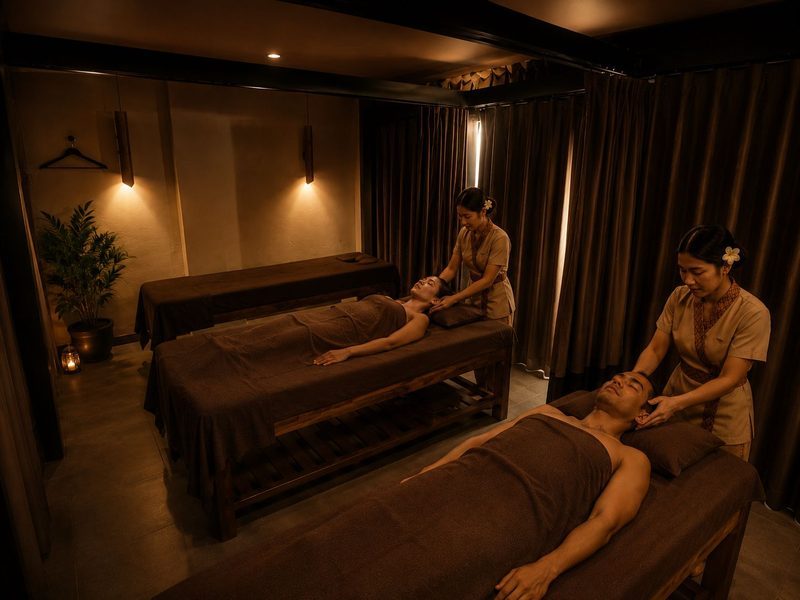
Two guests can be treated side by side in the same room, which is useful for couples or friends who want the same time slot without choosing the same pressure. One person can book light pressure and the other strong. The body does not care that the booking was made together.
Wear whatever is easy to change out of and put back on. Loose clothes after the session feel better than tight denim. Leave enough time after the massage to sit up slowly, drink, pay attention to traffic and not sprint straight into a reservation. Before dinner works well because the body is quieter and the face has lost the travel expression.
Finding Ijen Spa between Nusa Dua and the Bukit
Ijen Spa is a massage and reflexology spa at Toko Puri Dharmawangsa, Unit A14, Jalan Dharmawangsa, Benoa, Nusa Dua. The location sits between the Nusa Dua resort strip and the Bukit, a few minutes from Kampial and a short drive from Ungasan and Jimbaran. Guests book online at https://ijenspa.live/book or by WhatsApp at +62 813-5908-069, and walk-ins are welcome when a therapist is free.
The spa is open 10:00-23:00 daily. Online booking slots run 11:00-23:00, and the last start time depends on the treatment length. That matters for anyone landing late, eating early or trying to fit a massage after a beach day without rushing the therapist.
The full treatment menu is at https://ijenspa.live/treatments, Instagram is @ijenspa, and Google reviews are at https://maps.app.goo.gl/vYSD5fByNua3dTw77. The honest inheritance from Usada Bali is not a claim to ancient authority. The honest inheritance is careful touch, respect for local bodywork and knowing when a spa should stay in its lane.
Questions guests ask
Where can I try Balinese traditional healing in Nusa Dua?
A modern spa in Nusa Dua can offer massage influenced by Balinese bodywork, but a spa session is not the same as seeing a balian for diagnosis, ritual or herbal prescription. Ijen Spa offers Balinese massage and reflexology at Toko Puri Dharmawangsa, Unit A14, Jalan Dharmawangsa, Benoa, Nusa Dua.
What is the closest Ijen Spa treatment to Usada Bali?
The closest Ijen Spa menu choice to the bodywork side of Usada Bali is Balinese full body massage. The treatment uses oil, palm pressure, thumb work, kneading and steady strokes rather than the diagnostic and ritual parts of traditional healing.
How much is a Balinese massage in Nusa Dua at Ijen Spa?
Balinese full body massage at Ijen Spa is Rp 299,000 for 60 minutes and Rp 399,000 for 90 minutes. Guests choose light, medium or strong pressure before the session starts.
Is Balinese massage good after surfing on the Bukit?
Balinese massage can be a good choice after surfing on the Bukit because the therapist can spend time on shoulders, lower back, hips and calves. Strong pressure should be avoided on fresh sunburn, bruises or sharp pain.
Can I book a massage near Ungasan late at night?
Ijen Spa is a short drive from Ungasan and is open daily from 10:00 to 23:00. Online booking slots run from 11:00 to 23:00, with the last start time depending on the treatment length.